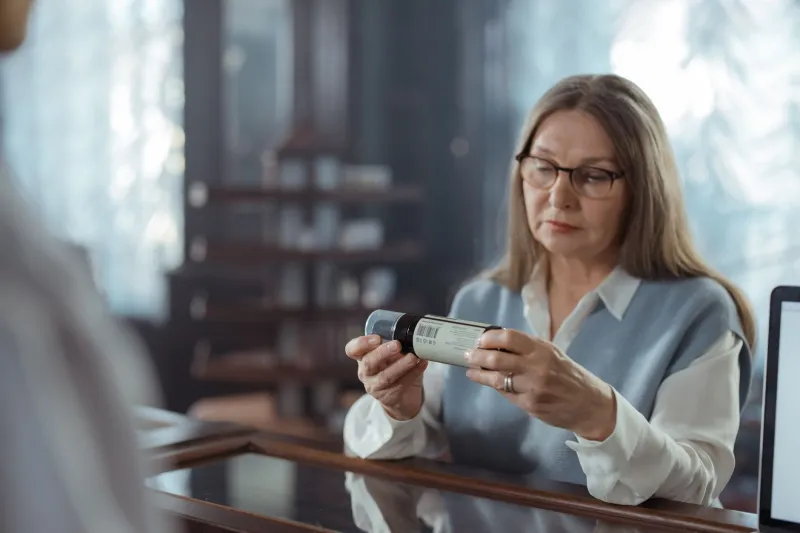
Turned Away at the Counter: What's Really Behind a Rejected Prescription — and How to Fix It Fast

You have already seen your doctor, received your diagnosis, and left the office with a prescription in hand or sent electronically to your pharmacy. By every measure, the hard part should be over. Then the pharmacist looks up from the screen and delivers news you were not expecting: your prescription cannot be filled today.
For millions of Americans, this scenario plays out at pharmacy counters every week. It is frustrating, sometimes alarming, and — depending on the medication — potentially dangerous if resolution is delayed. What is less understood is that a rejected prescription is rarely a dead end. In most cases, it is a solvable problem, provided you know which lever to pull and when.
Why Prescriptions Get Rejected: The Four Most Common Causes
Before you can resolve the issue, you need to understand what triggered it. Pharmacy rejections typically fall into one of four categories.
1. Insurance and Coverage Conflicts
The most frequent cause of a rejection at the counter is a real-time insurance processing error or coverage denial. Your insurer may flag the medication as not covered under your current plan tier, require a prior authorization before dispensing, or have a quantity limit that your prescription exceeds. In some cases, a recent change in your insurance plan — a new employer benefit year, a formulary update, or a lapse in coverage — can trigger a rejection that neither you nor your prescriber anticipated.
2. Drug Interaction or Clinical Screening Alerts
Pharmacy dispensing software continuously cross-references new prescriptions against your medication history on file. When a potential drug interaction, duplicate therapy, or contraindicated combination is detected, the system may generate a hard stop requiring pharmacist review before the prescription can proceed. This is not necessarily an error — it may be a legitimate clinical flag that warrants a conversation with your prescribing provider.
3. Controlled Substance Restrictions
Medications classified as controlled substances — including certain pain medications, stimulants, and anxiety treatments — are subject to additional regulatory scrutiny. Pharmacies are required to consult your state's Prescription Drug Monitoring Program (PDMP) database before dispensing these medications. If the database reflects an early refill pattern, overlapping prescriptions from multiple providers, or a geographic anomaly, the pharmacy may decline to fill the prescription until those concerns are resolved.
4. Technical and Administrative Errors
Not every rejection signals a clinical or policy problem. Typos in your date of birth, an incorrect insurance member ID, a missing prescriber DEA number, or an illegible quantity notation can all cause a prescription to bounce in the system. These administrative errors are among the most straightforward to fix — but only if they are identified quickly.
Your Immediate Action Plan at the Counter
When a rejection occurs, the temptation is to simply leave and hope someone sorts it out. Resist that impulse. The steps you take in the first fifteen to thirty minutes can dramatically shorten the resolution timeline.
Ask the pharmacist for the specific rejection code. Every insurance rejection generates a standardized code that tells you precisely why coverage was denied — whether it is a prior authorization requirement, a formulary exclusion, or a quantity limit. This code is your starting point for every subsequent conversation.
Request a brief consultation. Pharmacists are among the most accessible healthcare professionals in the American healthcare system. If the rejection involves a clinical flag or drug interaction alert, a pharmacist can explain what the system detected and help you decide whether to contact your prescriber before leaving.
Do not leave without a plan. Ask the pharmacy staff what documentation or actions are needed to resolve the rejection. A clear checklist — whether it involves your insurer, your prescriber, or a simple data correction — prevents you from making multiple return trips.
Navigating the Insurer and Prescriber Conversation
Once you have the rejection code and understand the category of the problem, your next calls matter.
If the rejection is insurance-related: Contact your insurer's member services line directly — the number is printed on your insurance card. Reference the rejection code and ask specifically whether a prior authorization is required, whether an alternative drug in the same class would be covered, or whether an exception process is available. Many insurers also offer online portals where prior authorization requests can be initiated or tracked in real time.
If your prescriber needs to act: Call the prescribing provider's office and clearly state that your prescription was rejected at the pharmacy, along with the specific reason. Prescribers and their staff handle prior authorization requests regularly. Provide them with the pharmacy's fax number and the insurer's prior authorization phone line so they can act without delay. In urgent situations, many prescribers can also call in a therapeutically equivalent alternative that your plan does cover.
If the rejection involves a controlled substance flag: This situation requires direct communication between the pharmacy and your prescriber. Do not attempt to resolve a PDMP-related hold on your own; the pharmacist and provider need to coordinate. Ask the pharmacist to document the specific concern and request that your provider's office call the pharmacy directly.
When a Bridge Supply or Temporary Solution Is Warranted
For patients who take a medication to manage a chronic or acute condition, even a one-day gap can carry real clinical consequences. If resolution will take longer than a few hours, ask the pharmacist whether an emergency supply can be dispensed. Many states permit pharmacists to provide a limited emergency supply of certain medications while prior authorization is pending. This is not universally available and does not apply to controlled substances, but it is worth asking about explicitly.
Some telehealth platforms and online care providers — including those that integrate prescription services — can also assist in identifying covered alternatives quickly, particularly when a patient's regular prescriber is unavailable.
Preventing the Bounce Before It Happens
The most effective fix is the one that prevents the rejection from occurring at all. Before any new prescription is sent to a pharmacy, it is worth confirming with your insurer whether the medication is covered under your current formulary and whether prior authorization will be required. Your prescriber's office can often run a coverage check at the time of the visit, and many electronic health record systems now include real-time formulary checking tools.
Maintaining an accurate and complete medication list on file at your pharmacy also reduces the likelihood of unexpected interaction flags. The more complete the picture your pharmacist has, the more precisely the dispensing system can screen for genuine risks rather than generating false alerts based on incomplete data.
The Takeaway
A prescription rejection at the pharmacy counter is not a final answer — it is the beginning of a process. The outcome depends almost entirely on how quickly and specifically you respond. Armed with the rejection code, a clear understanding of the cause, and direct communication with both your insurer and prescriber, most rejections can be resolved within a single business day. The key is knowing that the tools to fix the problem are already available to you, and that walking away without taking action is the one choice most likely to leave you without your medication.