Discharged but Not Cleared: The Dangerous Medication Gap Between Hospital Walls and Your Front Door
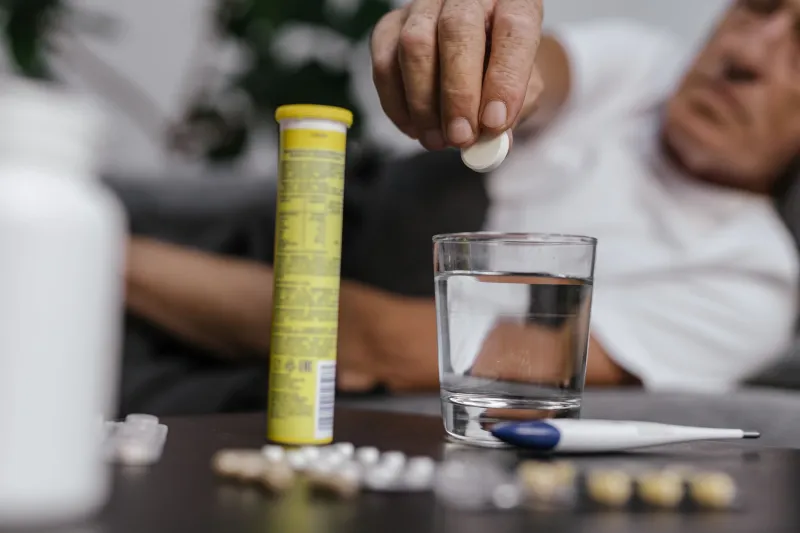
Leaving the hospital after an acute illness, surgery, or emergency visit should feel like a step toward recovery. For many patients, however, that moment of discharge marks the beginning of a quieter and far more confusing ordeal — one that unfolds not in an operating room, but at the kitchen counter when it's time to sort through a new stack of prescriptions alongside an existing pill organizer.
The mismatch between medications prescribed during a hospital stay and those a patient was already managing at home is not a rare edge case. It is, according to multiple studies published in peer-reviewed journals, one of the most common and consequential failures in the American healthcare continuum. The Institute for Healthcare Improvement has long identified medication reconciliation errors as a leading source of preventable patient harm, particularly during care transitions. Yet for most patients, the discharge process moves quickly, explanations are brief, and the assumption is that someone — somewhere — has already checked for conflicts.
Frequently, no one has.
What Medication Reconciliation Actually Means — and Where It Breaks Down
Medication reconciliation is the formal clinical process of comparing a patient's current medication list against any newly prescribed drugs to identify and resolve discrepancies. In theory, this should occur at every point of care transition: when a patient is admitted to a hospital, when they move between departments, and critically, when they are discharged.
In practice, the process is inconsistently applied. Hospital systems often work from incomplete medication histories. A patient admitted through the emergency department may not have their complete home medication list readily available. Electronic health records across different healthcare networks do not always communicate in real time. Physicians managing an acute episode may be focused on the immediate clinical picture rather than the patient's baseline medication regimen.
The result is a discharge summary that may list a new anticoagulant, a revised blood pressure medication, or a short-term steroid course — none of which have been formally reconciled against the patient's existing prescriptions for diabetes, thyroid conditions, or chronic pain management.
Once that patient arrives at their community pharmacy, the pharmacist may catch some conflicts. But without access to the full hospital record, and without a standardized communication channel between the inpatient system and the outpatient pharmacy, critical information is routinely missing from that conversation.
The Patient's Perspective: Confusion at a Vulnerable Moment
It is worth acknowledging the human dimension of this problem. Patients being discharged from a hospital stay are, by definition, not at their best. They may be fatigued, in pain, emotionally overwhelmed, or managing the logistics of arranging transportation and follow-up care. The window during which a nurse or physician walks through discharge instructions is often brief, and the volume of information delivered can be substantial.
Asking a patient recovering from cardiac surgery or a severe infection to serve as the primary quality control checkpoint for their own medication safety is, at minimum, an unfair burden. Yet without a reliable institutional handoff, that is effectively what the current system demands.
Common scenarios include patients who unknowingly take duplicate medications — one from their existing regimen and one prescribed at discharge under a different brand name. Others abruptly stop medications that should have been continued, because the discharge summary listed only new prescriptions. Still others begin taking combinations that interact negatively, producing side effects they attribute to their illness rather than to a preventable pharmaceutical conflict.
How RxConnect Care Addresses the Coordination Gap
At RxConnect Care, the transition from inpatient to outpatient care is treated as a clinical event in its own right — one that requires active coordination rather than passive assumption. Our pharmacy and telehealth teams are positioned precisely to bridge the gap that institutional systems often leave open.
When a patient connects with us following a hospitalization or emergency department visit, our pharmacists conduct a structured medication reconciliation review. This means comparing the discharge prescription list against every medication the patient was managing prior to their hospital stay — including over-the-counter drugs, supplements, and any prescriptions filled through outside providers. Discrepancies are flagged, duplicate therapies are identified, and where clinical concerns arise, our telehealth providers are available to consult directly with the patient and, when appropriate, with their discharging physician.
This is not a bureaucratic formality. It is a patient safety intervention that the standard discharge process frequently fails to provide.
Steps Every Patient Should Take Before Leaving a Care Facility
While systemic solutions continue to evolve, there are concrete actions patients can take to protect themselves during any care transition.
Request a complete reconciled medication list before discharge. Ask the discharging nurse or physician to provide a single, unified document listing every medication you should be taking after you leave — not just the newly prescribed ones. This list should include dosages, frequency, and whether any of your prior medications have been discontinued or modified.
Bring your existing medication list with you. If you are admitted for scheduled care, carry a written or printed record of every medication you currently take, including supplements and over-the-counter products. If the admission is unplanned, ask a family member or caregiver to bring this information to the hospital as soon as possible.
Ask specifically about interactions. Before accepting a new prescription, ask the discharging provider whether it has been cross-checked against your current medications. This is a reasonable and appropriate clinical question, and any provider should be able to answer it directly.
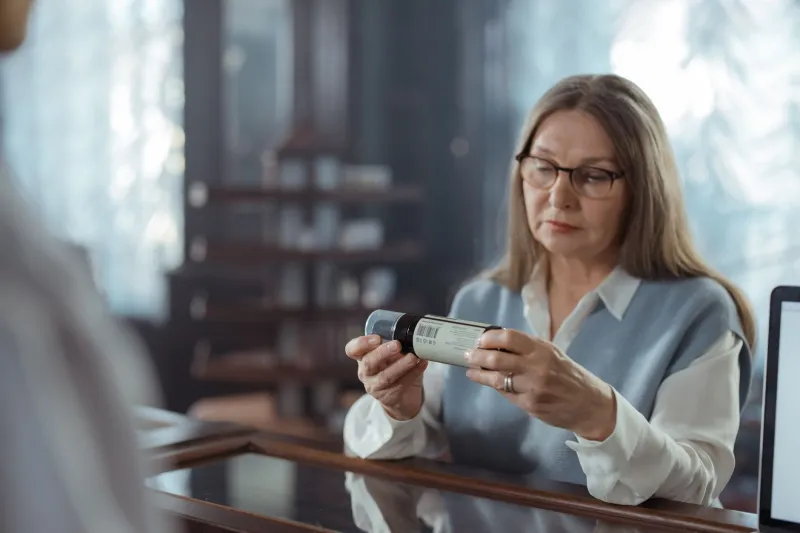
Verify with your pharmacist before filling. Your community pharmacist or, in this case, the clinical pharmacists at RxConnect Care, can serve as an independent review layer. Share your complete medication list when presenting a new prescription, and ask explicitly whether any conflicts exist.
Schedule a post-discharge consultation. Many adverse drug events following hospitalization occur within the first two weeks after discharge. A telehealth follow-up with your primary care provider or with an RxConnect Care clinician during this window can catch problems before they escalate.
A System Problem That Patients Shouldn't Have to Solve Alone
The medication reconciliation gap is, at its core, a structural failure — one that results from fragmented health records, time-pressured clinical environments, and the absence of a universal standard for care transition communication. Patients should not bear the full weight of correcting it.
What patients can do, however, is advocate for themselves with specific, targeted questions and seek out care teams that treat the discharge transition as a moment requiring active attention rather than routine paperwork.
At RxConnect Care, our mission is to function as exactly that kind of active partner — one that connects the clinical dots across care settings and ensures that what is prescribed in a hospital room is fully understood, fully reconciled, and fully safe by the time it reaches your medicine cabinet.